
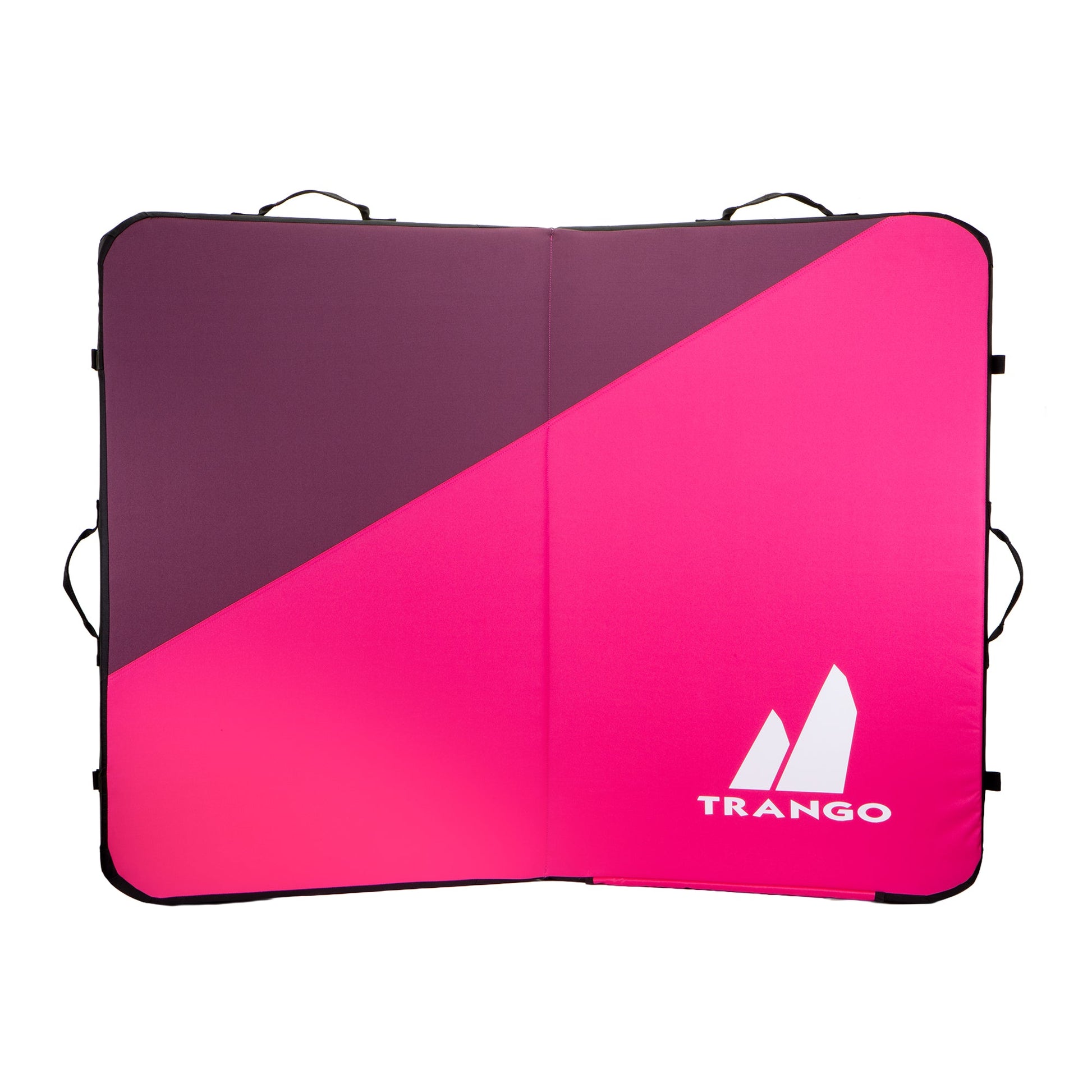
Lightweight All-Around Pad
Cumulus
The balanced choice for everyday bouldering: useful coverage, less bulk, and a fully adjustable carry system.
Trango Cloud Series
Crash pads are not interchangeable. Foam depth, landing area, carry system, weight, and modularity change how a pad works in the field. Start with the falls and approaches you expect, then choose the protection system that fits.
Start With the Landing
A short approach, a tall problem, an uneven landing, or a multi-pad session all ask different things from your crash pad. These are the clearest starting points in Trango's current lineup.
Balanced protection, manageable weight, and enough coverage for everyday bouldering without carrying more pad than you need.
CumulusFive inches of foam, a larger footprint, and a more supportive carry system for harder landings and longer sessions.
StratusPremium construction and modular expansion for climbers who want to build a larger, configurable landing zone.
AltusThe Cloud Series
The Trango Cloud Series is built around different approaches to bouldering protection. Cumulus keeps the system lighter. Stratus adds foam depth and carrying support. Altus turns the crash pad into a modular landing system. The right choice comes down to how much protection, coverage, and hauling capability you actually need.
Lightweight All-Around Pad
The balanced choice for everyday bouldering: useful coverage, less bulk, and a fully adjustable carry system.
More Foam + More Carry Support
A deeper, larger pad built around 5 inches of foam, a full carry system, and an oversized kangaroo flap for hauling additional gear or pads.
Premium Modular System
Five inches of triple-layer foam, premium recycled materials, a more supportive hauling system, and the ability to expand the landing zone with the Altus P'Add.
What Actually Changes
The most useful comparison is not simply size versus price. Foam depth changes impact management. Weight changes how many pads you are willing to carry. Carry systems matter once the approach gets longer. Modularity matters when the landing zone changes from problem to problem.
Cumulus uses a 3.75-inch three-layer foam package. Stratus and Altus move to 5 inches. If you regularly climb taller problems or expect harder impacts, the additional foam depth becomes a meaningful distinction.
A bigger pad only helps if it makes it to the landing. Cumulus puts a higher priority on manageable weight and bulk. Stratus accepts more weight for more foam and area. Altus prioritizes system capability.
Altus separates itself with the P'Add expansion concept. That lets you increase coverage for awkward zones, highballs, or multi-pad setups without making every outing an all-or-nothing carry.
Side-by-Side
The table below focuses on the specifications and use differences most likely to affect a real buying decision.
| Pad | Foam | Weight | Open Size | Carry / Transport | Best For |
|---|---|---|---|---|---|
| Cumulus | 3.75" triple-layer | 4.1 kg | 120 × 90 × 11 cm | Height/width adjustable carry, padded hip + sternum straps, load lifters | Everyday bouldering, lighter carries, multi-pad stacking |
| Stratus | 5" triple-layer | 5.6 kg | 130 × 100 × 12 cm | Adjustable carry, hip + sternum straps, load lifters, oversized kangaroo flap | More cushioning, larger coverage, longer sessions, hauling extra gear |
| Altus | 5" triple-layer | See current product configuration | 2- or 3-panel system | Height/width adjustable carry, oversized hip belt, stabilizers, load lifters | Premium protection, modular coverage, highballs, complex landings |
| Cyrrus | Specialty / supplemental | 1 kg (2 panel) / 1.5 kg (3 panel) | Configurable 2- or 3-panel format | Multiple G-hook points for flexible attachment and carry | Lightweight supplemental coverage and adaptable placement |
| Altus P'Add | Closed + open-cell foam | See current product page | Low-profile expansion pad | Designed to integrate with Altus | Gap filling, sit starts, extra coverage, expanding an Altus system |
Specialty Protection
Cyrrus and the Altus P'Add solve different problems than the three primary crash pads. Think of them as tools for extending, filling, or adapting the landing zone.
A lightweight, flexible supplemental pad with multiple G-hook attachment points. Use it when low weight and adaptable placement matter more than full-size standalone cushioning.
View Cyrrus
The dedicated Altus expansion pad. Add coverage to the Altus system, fill seams or awkward terrain, protect sit starts, or carry it when a smaller supplemental pad is enough.
View Altus P'AddStart with your most common problems and approaches. Choose the pad that covers those well, then add supplemental protection when the terrain demands it.